
Ashwagandha manufacturers in India turn Withania somnifera root extract into finished tablets, capsules, churna, or powder for wellness brands that want to launch a supplement line without owning a factory. India supplies nearly all the world’s ashwagandha, concentrated around Madhya Pradesh’s Neemuch-Mandsaur belt, and U.S. demand for the herb jumped over 200% in a single year during the pandemic. A reliable manufacturer needs four things: production capacity, formulation expertise, GMP-certified quality systems, and infrastructure to standardize the withanolide content batch to batch — since that’s what separates a consistent supplement from one where potency drifts.
Phytovends is a third-party Ayurvedic manufacturer handling formulation, GMP-certified production, quality testing, and packaging for tablets, capsules, churna, and powder, so brands can launch under their own label.
What Is Ashwagandha?
Ashwagandha is an ancient Indian herb — its botanical name is Withania somnifera — traditionally used to help the body handle stress. The Ashwagandha plant is a small shrub grown across India, and its Sanskrit name literally means “smell of a horse,” a nod to the root’s earthy scent and its old reputation for building strength. In Ayurveda, it’s classified as a Rasayana, meaning a rejuvenating herb, and people have relied on it for over 3,000 years. You’ll also see it sold as “Indian ginseng,” though it’s not related to real ginseng at all.
Most of its benefits come from withanolides, natural compounds concentrated in the root. That’s also why most quality supplements are made from root extract rather than the whole plant — it’s where the science actually points.
India grows nearly all the world’s supply, with Madhya Pradesh’s Neemuch-Mandsaur belt as the heart of it. Demand has exploded in the last few years — U.S. sales alone jumped over 200% in a single year during the pandemic — which is part of why so many new brands are entering the ashwagandha supplement India market, and why picking a manufacturer capable of delivering the best ashwagandha supplement matters more than ever.
Health Benefits of Ashwagandha
The ashwagandha benefits people ask about most are lower stress and anxiety, better sleep, more muscle strength, and sharper focus — real ashwagandha supplement benefits backed by clinical trials, not just tradition. A 2026 review of 22 trials on nearly 1,400 people confirmed the benefits of ashwagandha for stress and mood held up consistently, especially when taken for 8 weeks or longer.
Lower stress
This is the best-studied benefit, and one of the most searched-for ashwagandha benefits for female wellness and stress management too. In one 8-week trial, people taking a standardized root extract saw cortisol — the main stress hormone — drop nearly 28% versus placebo, and reported feeling steadier, not sedated.
Better sleep
It’s not a sleeping pill. Trials show people falling asleep faster and sleeping more soundly, most likely because easing stress removes what was keeping them up.
More strength
Backed by solid training studies: people gained more muscle strength and recovered faster than those on placebo. This is where ashwagandha benefits for men often stand out — some also saw a modest testosterone rise, one of the more talked-about benefits of ashwagandha for men, though it’s a side effect of lower cortisol, not a direct boost.
Sharper focus
Several trials found real gains in attention and processing speed, with some of the strongest results in older adults noticing early memory slips.
That’s the well-evidenced core. Smaller studies also suggest benefits for immunity, inflammation, heart health, blood sugar, skin, and healthy aging — promising but not proven at the same level. One caution: it can raise thyroid hormone levels, so check with a doctor first if you have a thyroid condition — one of the few ashwagandha side effects worth knowing about before starting a daily dose.
Forms of Ashwagandha Products
Ashwagandha can also be found in the forms of powder, capsules, or tablets, and knowing the different forms of Ashwagandha available helps brands pick the right one for their audience.
Working with a sophisticated Ayurvedic manufacturer is an enormous benefit as you can choose to make use of a product format that reflects your target customers and matches their ashwagandha uses — whether that’s daily wellness, workouts, or traditional Ayurvedic routines.
Ashwagandha Tablets
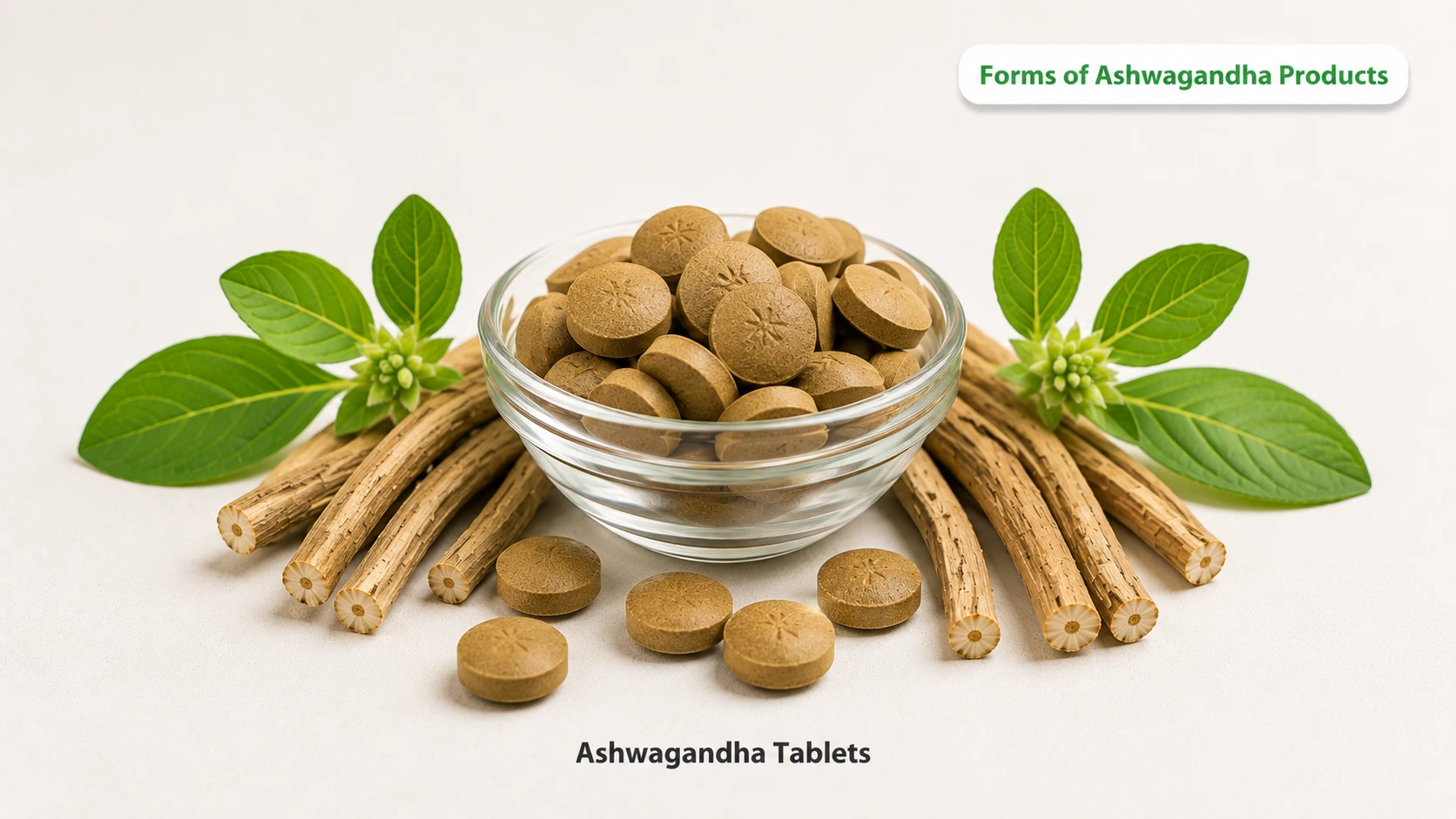
Ashwagandha tablets are the easiest way to take a consistent, measured dose — no taste, no mixing, just swallow and go. Made from standardized root extract, each ashwagandha tablet delivers the same amount of active compound every time, giving you the core benefits of ashwagandha tablets — steadier stress, better sleep, stronger recovery — in one simple daily dose for wellness, workouts, or general stress management. These everyday ashwagandha tablet benefits are also why tablets are one of the most common ashwagandha tablet uses brands ask for when setting up a private-label wellness line. Phytovends makes both coated tablets (for a smoother taste) and uncoated tablets for a more traditional Ayurvedic feel.
Ashwagandha Capsules
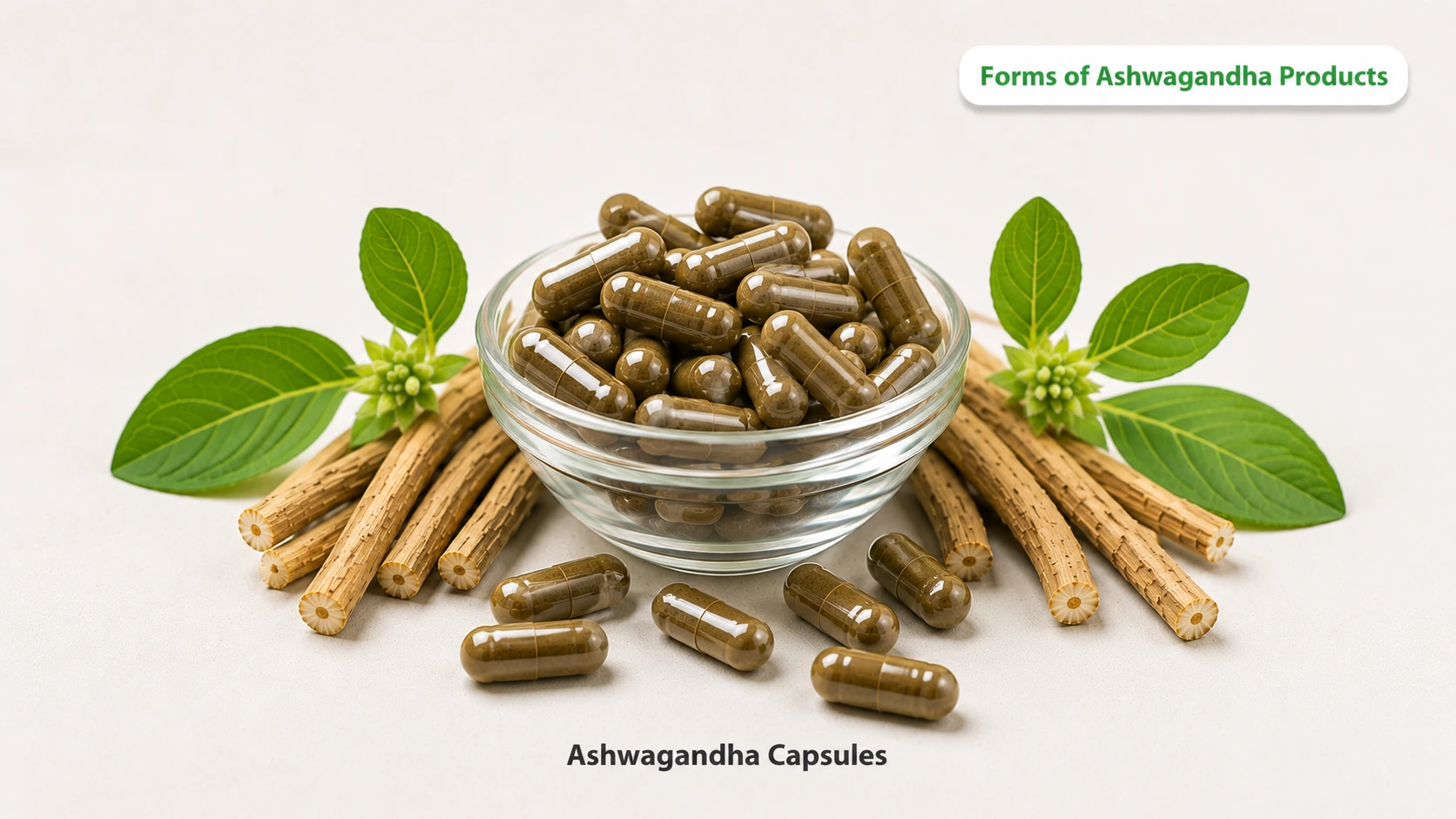
Ashwagandha capsules give you the same standardized-extract benefits as tablets — steadier stress, better sleep, stronger recovery — in a form many people find easier to swallow and quicker for the body to break down. Each ashwagandha capsule is also a popular pick for private-label brands, since fill weight and capsule color are simple to customize per order.
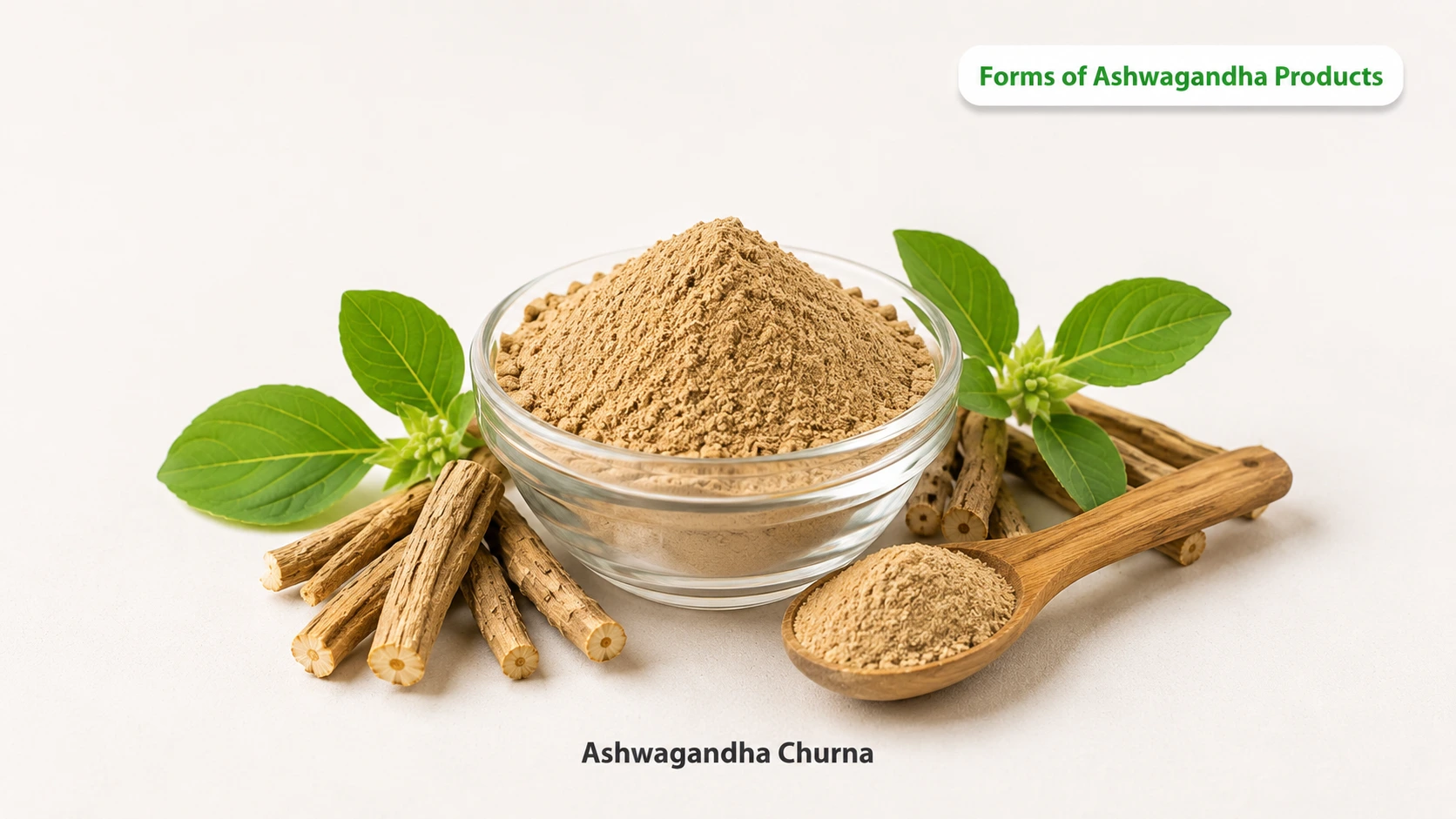
Ashwagandha churna is the traditional Ayurvedic powder form — the herb ground fine and prepared closer to old-school methods than a modern standardized extract. It carries the same core benefits as the herb itself, but appeals most to people who want an authentic, traditional feel rather than a lab-standardized supplement. It’s a natural fit for brands building an Ayurveda-first identity.
Ashwagandha Powder
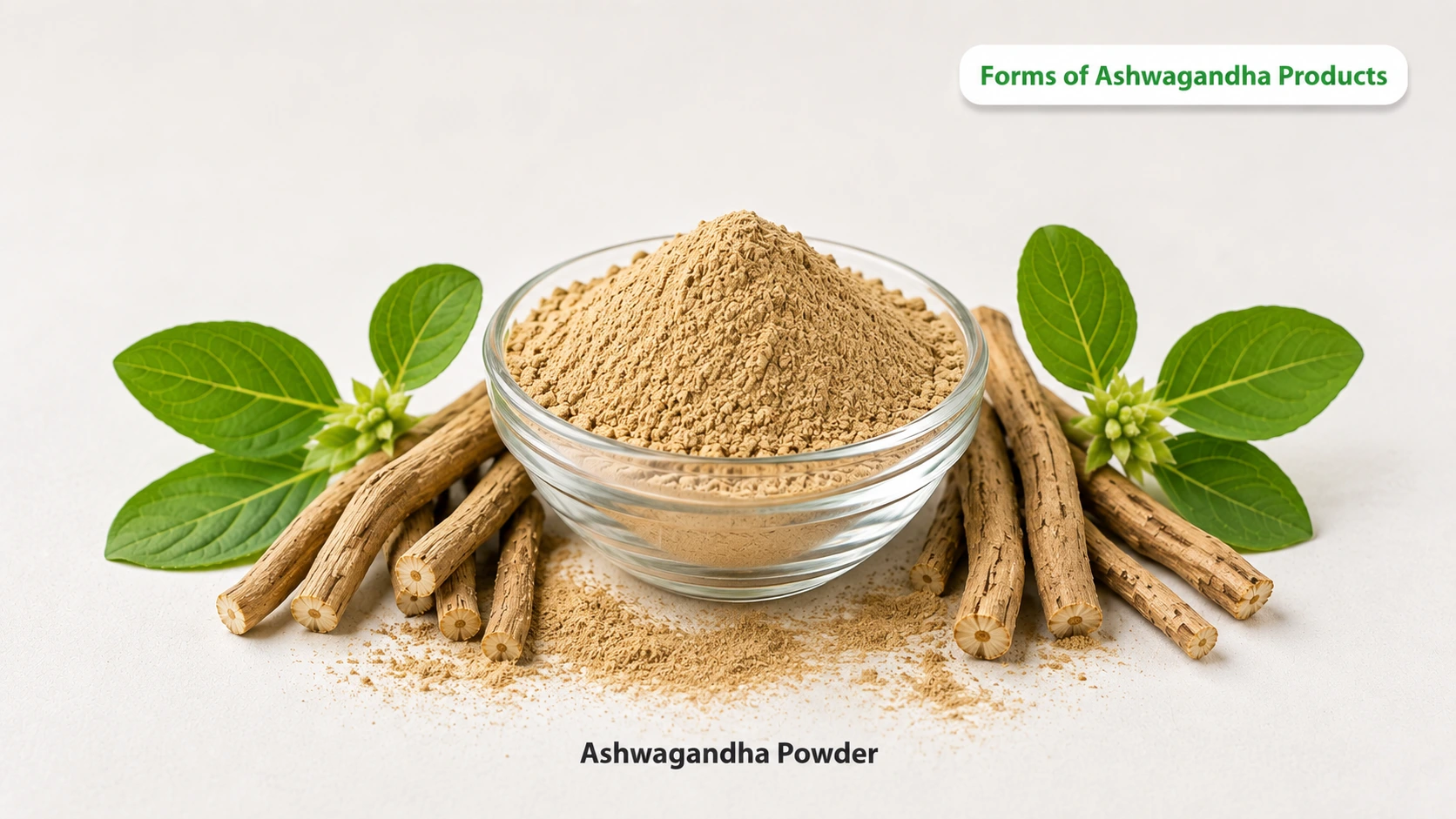
Ashwagandha powder is the most flexible way to take the herb — mix it into food, drinks, or the classic warm-milk preparation Ayurveda has used for generations before bed, which is still one of the easiest answers to how to take ashwagandha powder. The benefits of ashwagandha powder are largely the same core ashwagandha powder benefits you’d get from tablets and capsules, and it covers most everyday ashwagandha powder uses, but with one trade-off: without a standardized withanolide count, the actual strength can vary from batch to batch, so dosing is less precise — which is why some brands prefer working with the purest form of Ashwagandha in a standardized extract instead.
Between tablets, capsules, churna, and powder, there’s no single answer to which form of Ashwagandha is best — it depends on whether a brand wants precise dosing or an authentic Ayurvedic feel, and exploring the different forms of Ashwagandha side by side is often the fastest way for a brand to land on the best forms of Ashwagandha for its audience. Phytovends’ other manufacturing Ayurvedic products include tablets, capsules, churna, pure herbs, oils, and other herbal formulations.
Ashwagandha Manufacturing Process
Making an Ashwagandha product involves seven steps: understanding the brand’s requirements, selecting or developing the formulation, sourcing the raw herb, manufacturing based on the chosen form, quality testing, packaging, and final delivery. The process stays largely the same regardless of dosage form — what changes is the equipment and finishing steps once the extract is ready.
- Requirement and formulation discussion. The process starts with understanding the brand’s product idea, target dosage form, and any specific formulation preferences.
- Formulation selection or development. The right extract standardization and formulation are chosen or custom-developed to match the brand’s goals.
- Sourcing and processing the herb. Raw Ashwagandha root is sourced and processed into the extract or powder used in the final product.
- Manufacturing. The formulation is manufactured on dedicated machines based on the chosen dosage form — tablets, capsules, churna, or powder.
- Quality testing. Batches go through quality checks before moving forward, so the final product matches what was formulated.
- Packaging and labeling. Products are packaged and labeled per the brand’s specifications and regulatory requirements.
- Final delivery. The finished, tested product is delivered to the brand, ready to sell.
Phytovends runs this process with an in-house team of Ayurvedic formulators and technologists, working out of GMP-certified facilities with AYUSH and ISO-aligned quality support.
Why Choose Phytovends as Your Ashwagandha Manufacturing Company?
Phytovends is a third-party Ayurvedic manufacturer that handles end-to-end Ashwagandha production — formulation, manufacturing, quality testing, and packaging — so brands can launch under their own label without building a factory. Businesses get access to an in-house team of Ayurvedic formulators and technologists, working out of GMP-certified facilities with ISO and AYUSH-aligned quality support, across tablets, capsules, churna, and powder.
An Ayurvedic ashwagandha product can be formulated differently depending on the intended market segment and positioning — a wellness-focused capsule line looks different from a traditional churna line, for example. Working with an experienced third-party manufacturer like Phytovends means brands can build and launch a product line under their own name without investing in a stand-alone manufacturing unit, while still getting full access to production infrastructure and formulation expertise.
A few things that matter when picking a manufacturing partner, and where Phytovends fits:
- Formulation support. In-house Ayurvedic R&D helps brands choose or develop the right formulation instead of guessing.
- Flexible production. Options for different order sizes, so both new and established brands can work with the same partner as they grow.
- Multiple dosage forms. Tablets, capsules, churna, and powder — all covered under one roof, no need to split production across vendors.
- Quality checks built into production, not just at the end.
- Private label and third-party manufacturing, with documentation support for AYUSH-related compliance.
- End-to-end packaging support, so the product arrives shelf-ready.
- Scalable production, built to grow with the brand rather than cap it.
Conclusion
One of the critical steps toward establishing a leading brand in Ayurvedic wellbeing is finding the right Ashwagandha manufacturers in India. Whether it’s tablet filling, capsule filling, or churna and powder manufacturing, brands need a manufacturer that can deliver consistency and scalability.
Knowing your customer is your greatest asset when creating a product — a Phytovends formulary expert can help you build a product that best suits your customers’ needs. Ayurvedic formulation knowledge, GMP-certified manufacturing facilities, multiple dosage forms, built-in quality checks, and private label support make Phytovends an end-to-end manufacturing solution for businesses building their new Ashwagandha product range.
Frequently Asked Questions ( FAQ )
Q1. Which state in India produces the most Ashwagandha?
Madhya Pradesh’s Neemuch-Mandsaur belt is the heart of India’s Ashwagandha cultivation, and India grows nearly the entire world’s supply of the herb. This concentration of raw material sourcing is one reason India-based manufacturers can offer more consistent quality and pricing than brands sourcing extract elsewhere.
Q2. What certifications should an Ashwagandha manufacturer in India have?
Look for GMP-certified manufacturing facilities with ISO and AYUSH-aligned quality support — these confirm the manufacturer follows standardized production, testing, and documentation practices required for Ayurvedic supplements. Phytovends operates under all three, with quality checks built into production rather than only at the final stage.
Q3. Can I start an Ashwagandha supplement brand without owning a factory?
Yes. Third-party manufacturers like Phytovends handle formulation, production, quality testing, and packaging end-to-end, so a brand can launch tablets, capsules, churna, or powder under its own label without investing in manufacturing infrastructure. This is how most new Ashwagandha brands enter the ashwagandha supplement market in India today.
Q4. What’s the difference between Ashwagandha tablets, capsules, churna, and powder?
Tablets and capsules use a standardized root extract for precise, consistent dosing. Churna is the traditional Ayurvedic powder form, ground closer to old-school methods for brands building an Ayurveda-first identity. Loose powder is the most flexible but, without standardized withanolide content, its potency can vary batch to batch.
Q5. What should a brand look for when choosing an Ashwagandha manufacturing partner?
The key factors are in-house formulation R&D, GMP-certified facilities, flexible order sizes that scale as the brand grows, support across multiple dosage forms under one roof, and private-label documentation support for AYUSH-related compliance — so production doesn’t need to be split across vendors.